
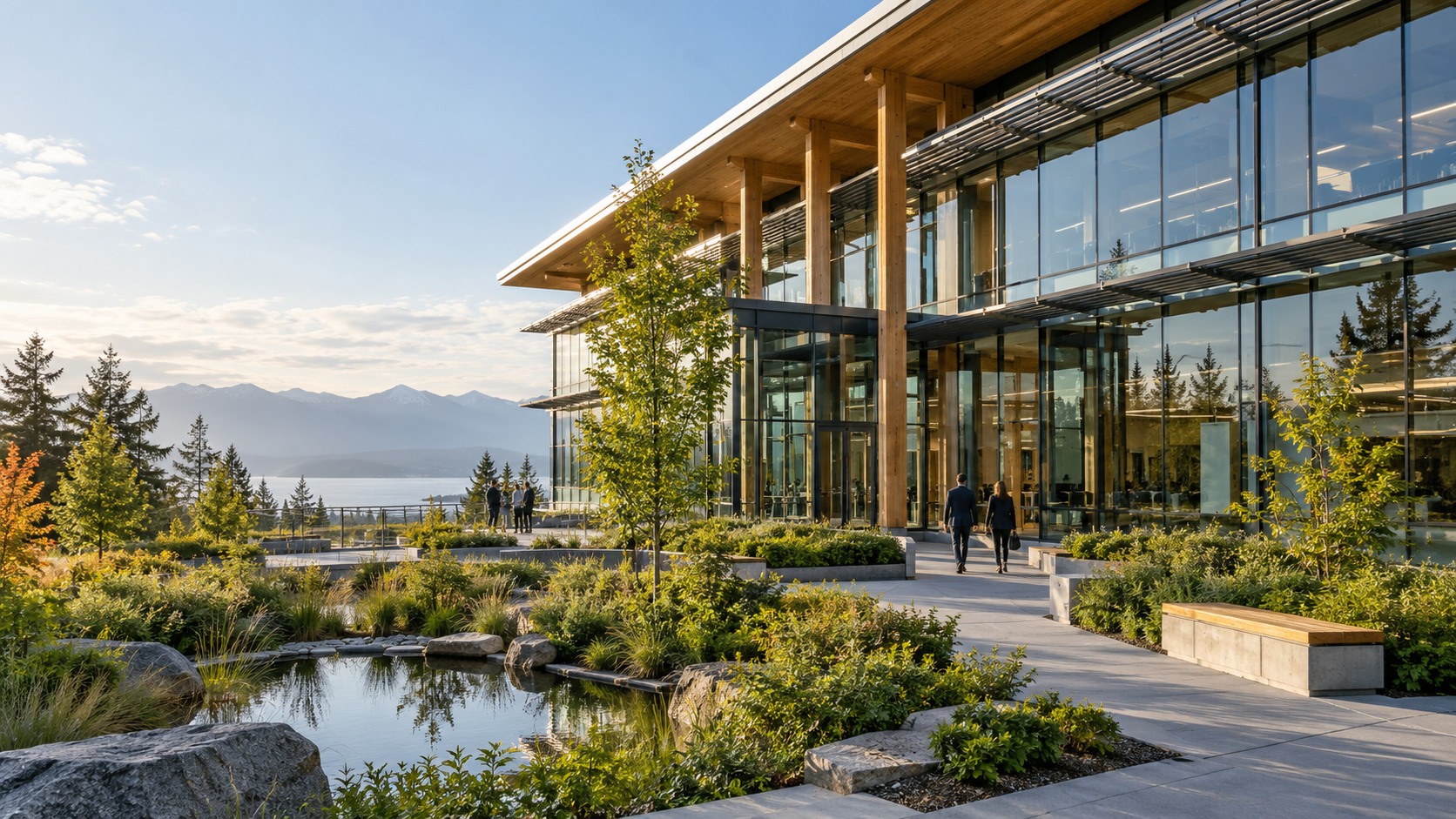
Certification & Compliance Management for the USA & Canada
LEED was built in the United States, and 2025 alone saw 392 US office projects certify under it — nearly 63 million square feet. Here’s what that home-market strength, plus Canada’s own push toward ISSB-aligned disclosure, means for certification and ESG teams across North America.
The US Green Building Council’s LEED standard is the certification system most of the rest of the world benchmarks against — and the US market shows why. In 2025 alone, 392 office projects earned LEED certification, covering nearly 63 million square feet of gross area; 197 of those reached Gold, accounting for almost 34 million square feet on their own. USGBC’s 2025 Top 10 States ranking put Massachusetts first for the second straight year, with Illinois second and Colorado climbing six spots to third — driven, USGBC says, by innovation-heavy sectors like life sciences, data centers and advanced manufacturing.
Canada’s certification market has historically run at serious scale too: in an earlier USGBC Top 10 Countries and Regions ranking, Canada placed second globally with 2,970 LEED-certified projects — a dated figure, but one that reflects how deeply LEED penetrated the Canadian market well before more recent disclosure rules even existed.
Why certification and ESG reporting matter across the US and Canada

The regulatory picture for ESG disclosure looks different in each country right now, and it’s worth being precise about that rather than assuming one federal mandate covers both. In the US, the SEC’s 2024 climate-disclosure rule has effectively stalled: the Commission stayed the rule pending litigation, voted in March 2025 to end its legal defense of it in the Eighth Circuit, and by mid-2026 was moving toward a formal proposal to rescind it entirely. That doesn’t mean climate and ESG reporting pressure has disappeared in the US — it means the pressure is now investor-driven and state-level rather than a single federal deadline, which is a real but less bounded motivation to get ahead of.
Canada’s path looks more active: the Canadian Sustainability Standards Board is expected to publish new voluntary disclosure standards by 2027, explicitly designed to align Canada with the global ISSB framework. CAGBC’s own leadership has described green building as shifting from a nice-to-have into a business imperative, and the organization notes that buildings account for more than 30% of Canada’s total greenhouse gas emissions — which is exactly why building-level certification and company-level climate disclosure are converging in Canada even without a binding national disclosure law yet.
How big is the US green building market?
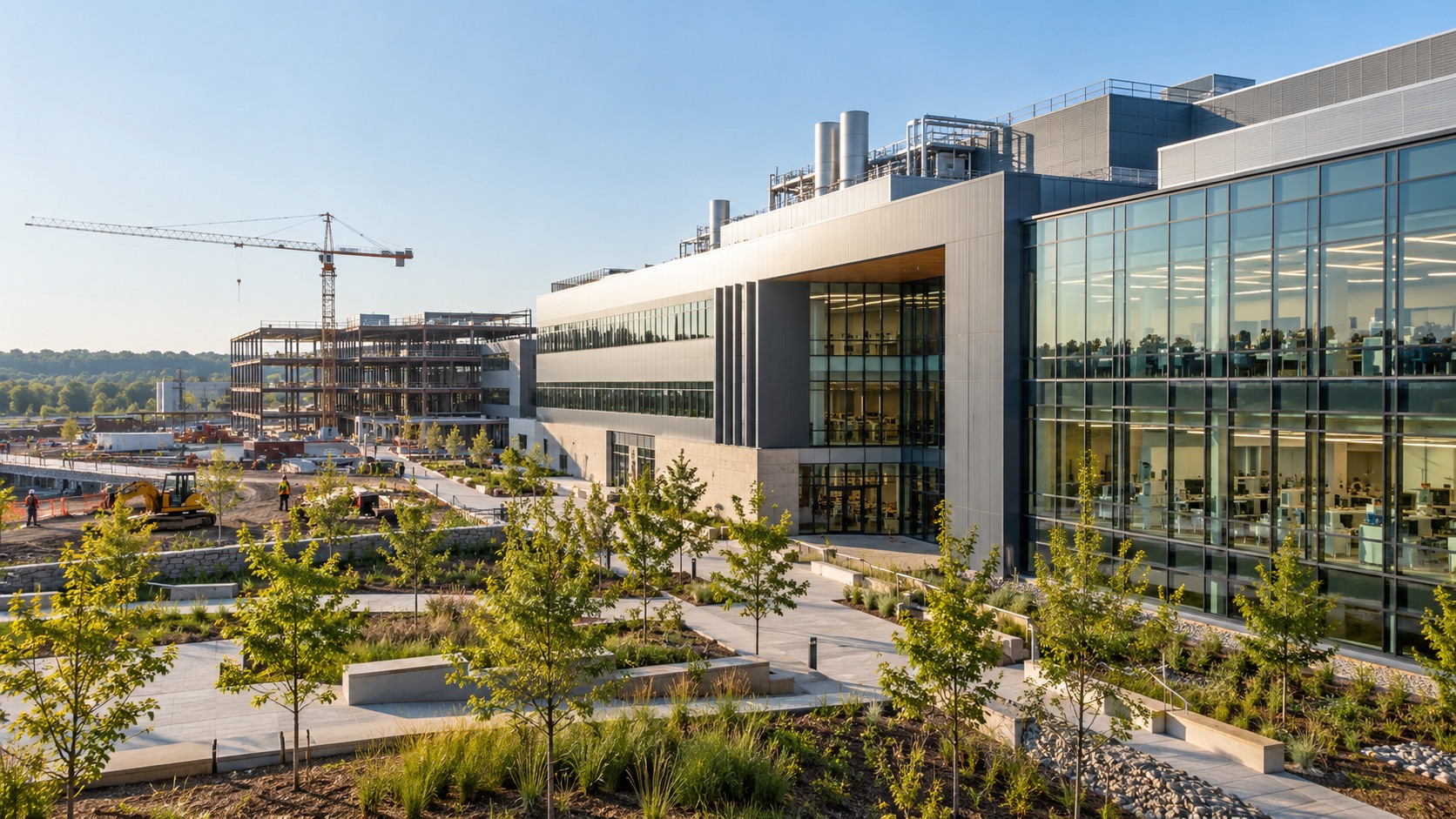
The most defensible current figures are activity-based, not valuation-based: 392 US office projects certified under LEED in 2025, totaling almost 63 million square feet, with 197 of those at the Gold tier. Older USGBC figures — 2 billion square feet of LEED-certified commercial space and roughly 50,000 participating projects — are now a decade or more out of date and shouldn’t be cited as current totals, but they show the scale LEED reached even before this more recent annual data.
What the 2025 state rankings add is a geographic signal: certification activity is concentrating in states with strong innovation-sector construction — life sciences, data centers, advanced manufacturing — rather than spreading evenly, which matters for where a certification project is likely to find local expertise and precedent.
A closer look: CPChem’s new headquarters
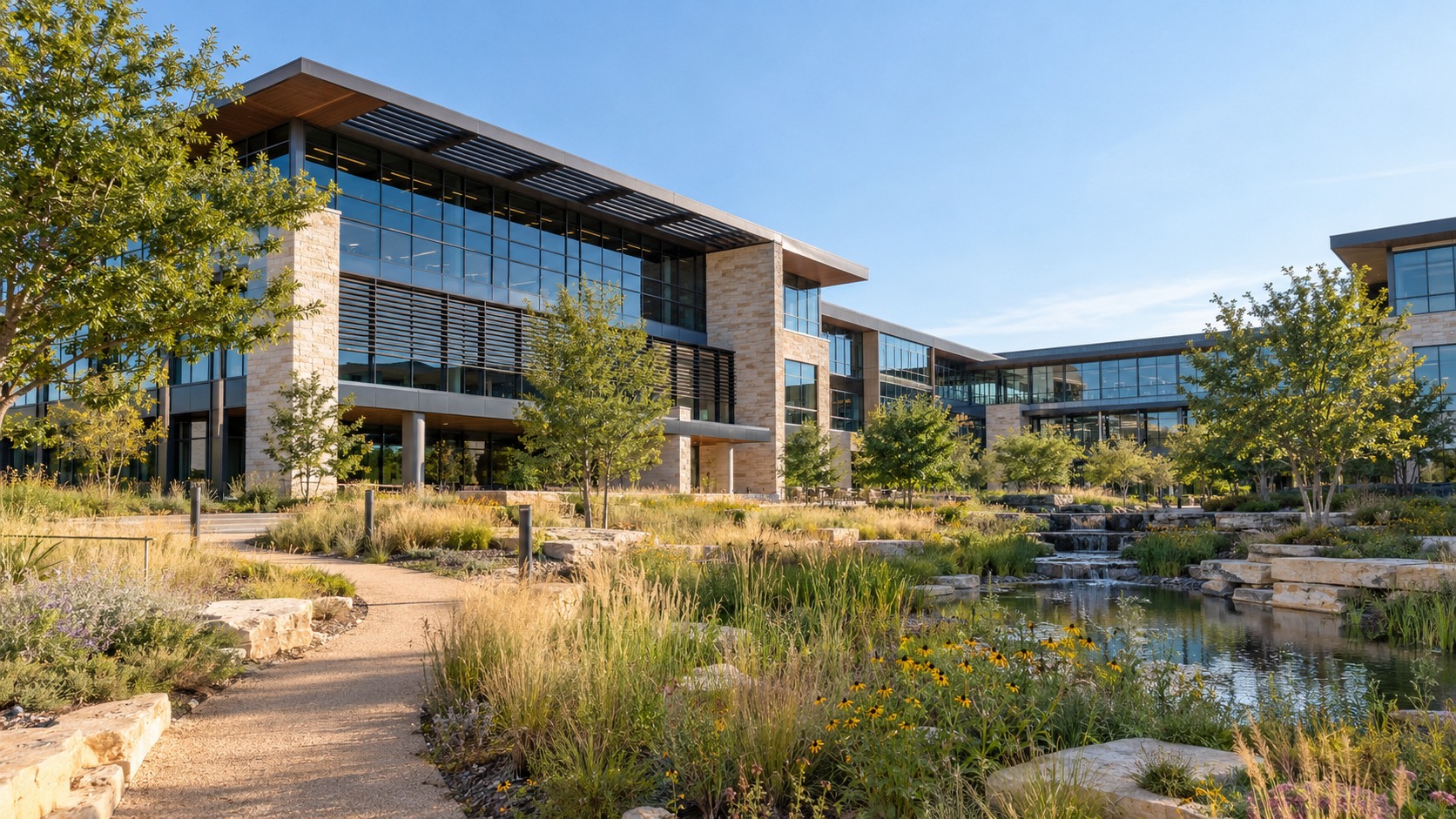
Chevron Phillips Chemical’s new headquarters in The Woodlands, Texas, opened in 2024 and was designed and built to LEED standards from the start, according to the company’s own 2025 sustainability report — the report ties that choice directly to better resource efficiency and outdoor spaces supporting local biodiversity, rather than treating LEED as a bolt-on badge after construction.
It’s a useful example precisely because it’s a corporate headquarters decision, not a developer’s speculative project — the same category of building most companies reading this page are likely planning or occupying themselves.
How Ecoinch helps

LEED credit structures are built into Ecoinch exactly as they are for every other market this platform supports — not simplified for the US specifically, and not a generic checklist. EDGE credit structures sit alongside LEED for teams working on emerging-market-style projects even from a US or Canadian base, and GRI-aligned sustainability reporting is built into the same workspace for companies whose investors or global partners expect disclosure that doesn’t wait on a federal mandate.
For a Canadian company tracking toward the CSSB’s 2027 standards, that GRI-aligned structure means the evidence-collection discipline can start now, well before the standards themselves are finalized — rather than retrofitting a reporting system once a deadline is set.
How a certification project runs on Ecoinch

A project registers under LEED or EDGE, assigns each credit to a responsible owner, and collects evidence continuously from the start of construction rather than compiling it retroactively before a certification deadline — the same structured cycle whether the project is a single corporate headquarters or a portfolio of buildings tracked across both US and Canadian operations.