
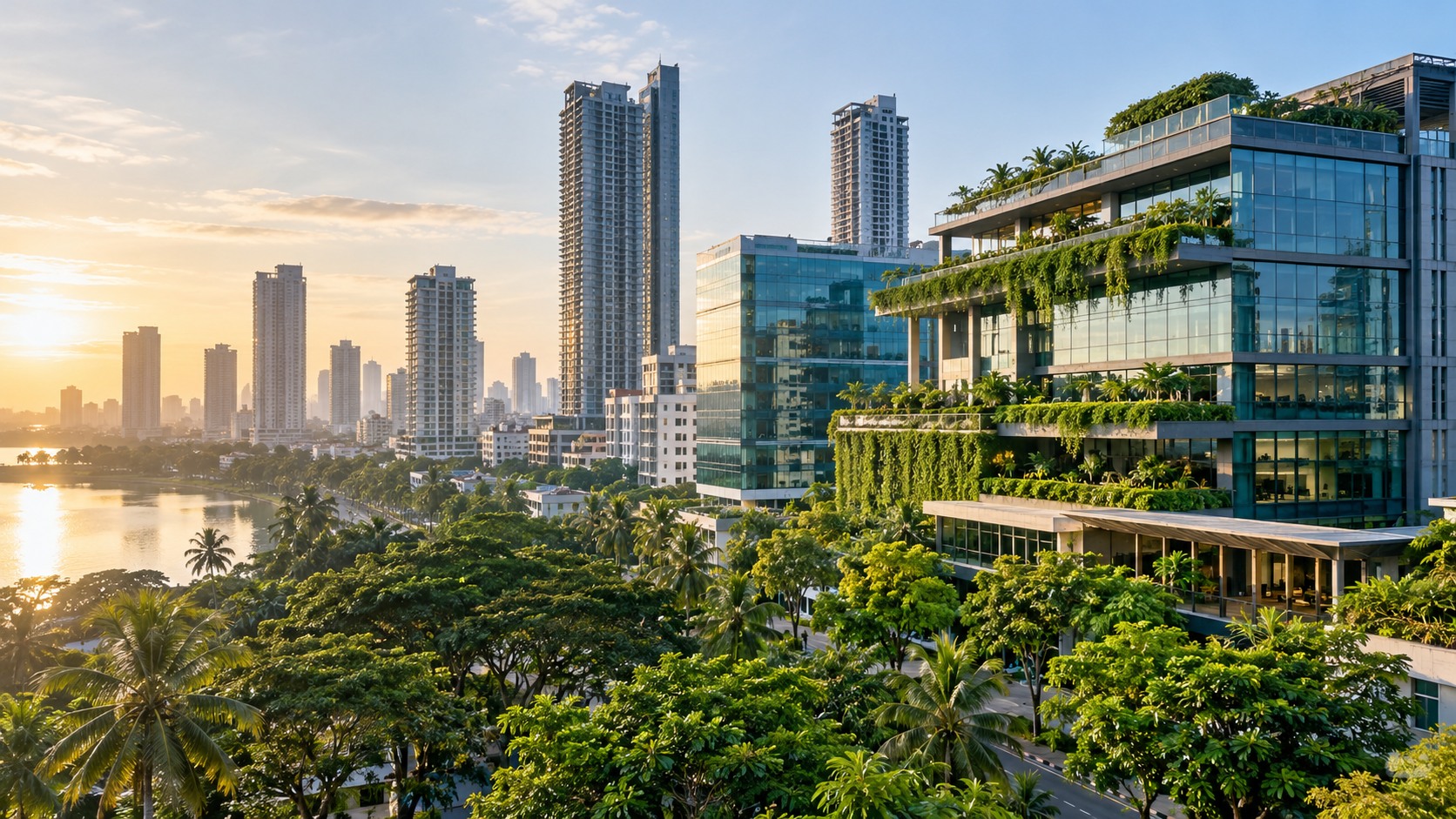
Certification & Compliance Management for Sri Lanka
Green building certification in Sri Lanka is still young, but genuinely moving — from a national rating system to the country’s first EDGE-certified building. Here’s what that means for teams running certification and ESG projects today.
Sri Lanka’s own Green Building Council (GBCSL) created GREENSL, a rating system benchmarked against LEED but adapted for local conditions — recognition that a Colombo office tower and a New York one don’t face the same climate, materials or construction practices. That local-first instinct runs through the island’s wider construction sector, even as LEED and EDGE, the two internationally recognized certifications Ecoinch supports, remain the certifications developers actually pursue when they want recognition outside Sri Lanka.
Market data on the island’s certification activity tells a specific story: of the certification activities tracked in one market review, the large majority — roughly 45 of 52 — were LEED. EDGE arrived more recently. In April 2024, Classique Centre, developed by People’s Leasing & Finance, became Sri Lanka’s first EDGE-certified green building, independently verified by an EDGE auditor. EDGE’s bar is concrete: a minimum 20% reduction in energy use, water use and the embodied energy of materials, compared to a standard local building.
Why certification matters for projects in Sri Lanka

The barriers slowing wider green-building adoption in Sri Lanka are well documented: certification research on the local market points to 5-10% higher upfront construction costs, unfamiliarity with the process among contractors, technical difficulty during construction, and approval processes that can run long. None of these are reasons to skip certification — operational savings over a building’s lifecycle are reported to outweigh the initial premium, and that premium itself tends to shrink as more projects go through the process — but they are exactly the kind of friction that turns a certification project into a spreadsheet-and-email problem if nobody is tracking evidence, credits and deadlines in one place.
That friction compounds when a project spans multiple parties — a developer, an EDGE or LEED consultant (Classique Centre’s certification needed an outside auditor, since Sri Lanka’s own EDGE-auditor capacity is still growing), contractors and, often, a financing partner who wants proof the sustainability commitments tied to a loan are actually being met.
The market Sri Lanka’s certification activity sits inside
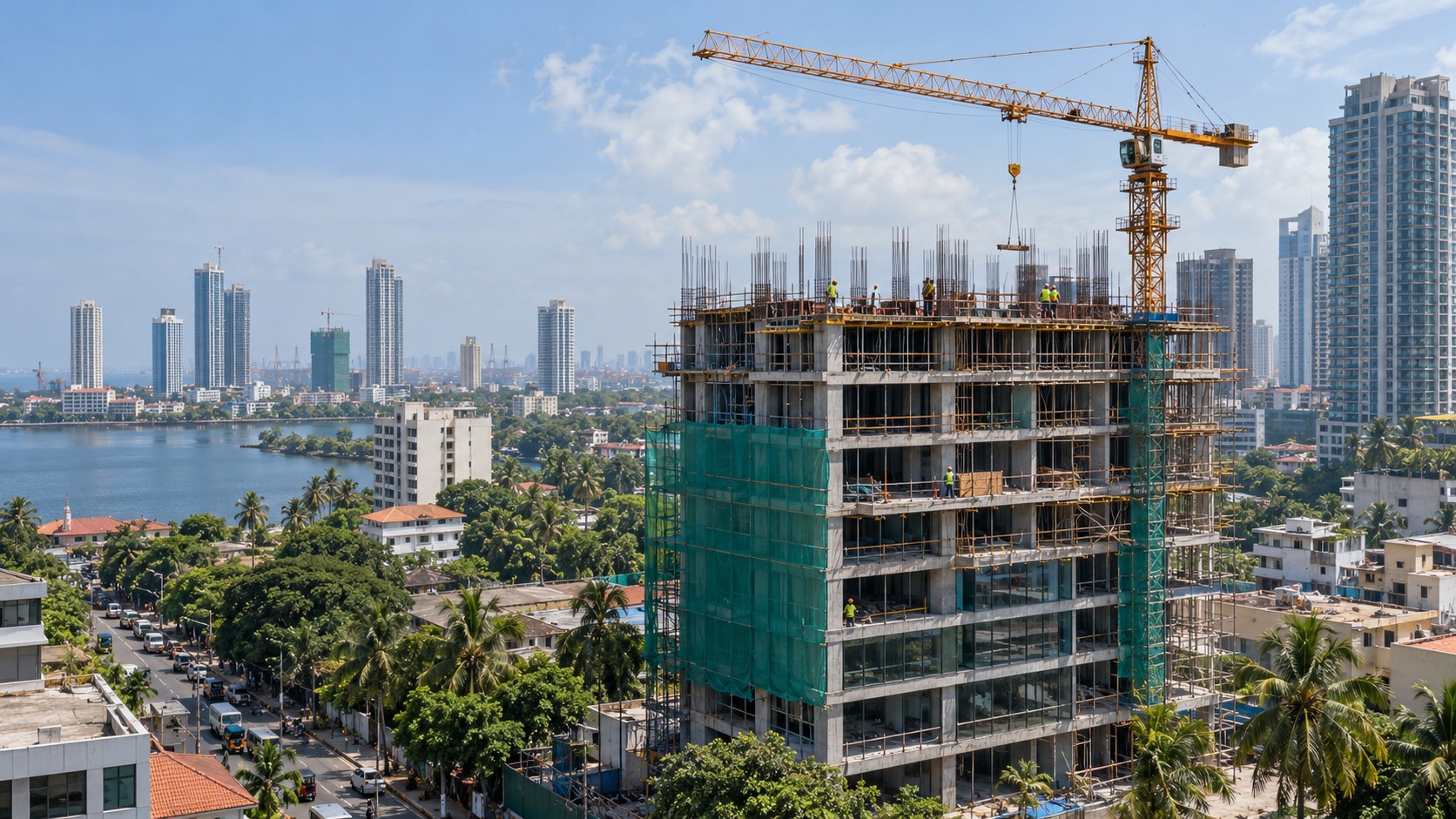
Sri Lanka’s wider construction industry is forecast to grow 7.9% in real terms in 2025, with average annual growth of 5.2% projected from 2026 through 2029, driven by rising gross fixed capital formation and increased public and private investment. Certification activity sits inside that broader expansion rather than as a separate market of its own — as more buildings get built, the share pursuing LEED or EDGE recognition becomes the more relevant number to track than the construction market’s total size.
What’s measurable today is certification volume, not certification market value: of the activity tracked in one market review, roughly 45 of 52 certification projects were LEED, with EDGE a newer but growing addition since Classique Centre’s 2024 certification.
A closer look: Sri Lanka’s certification milestones
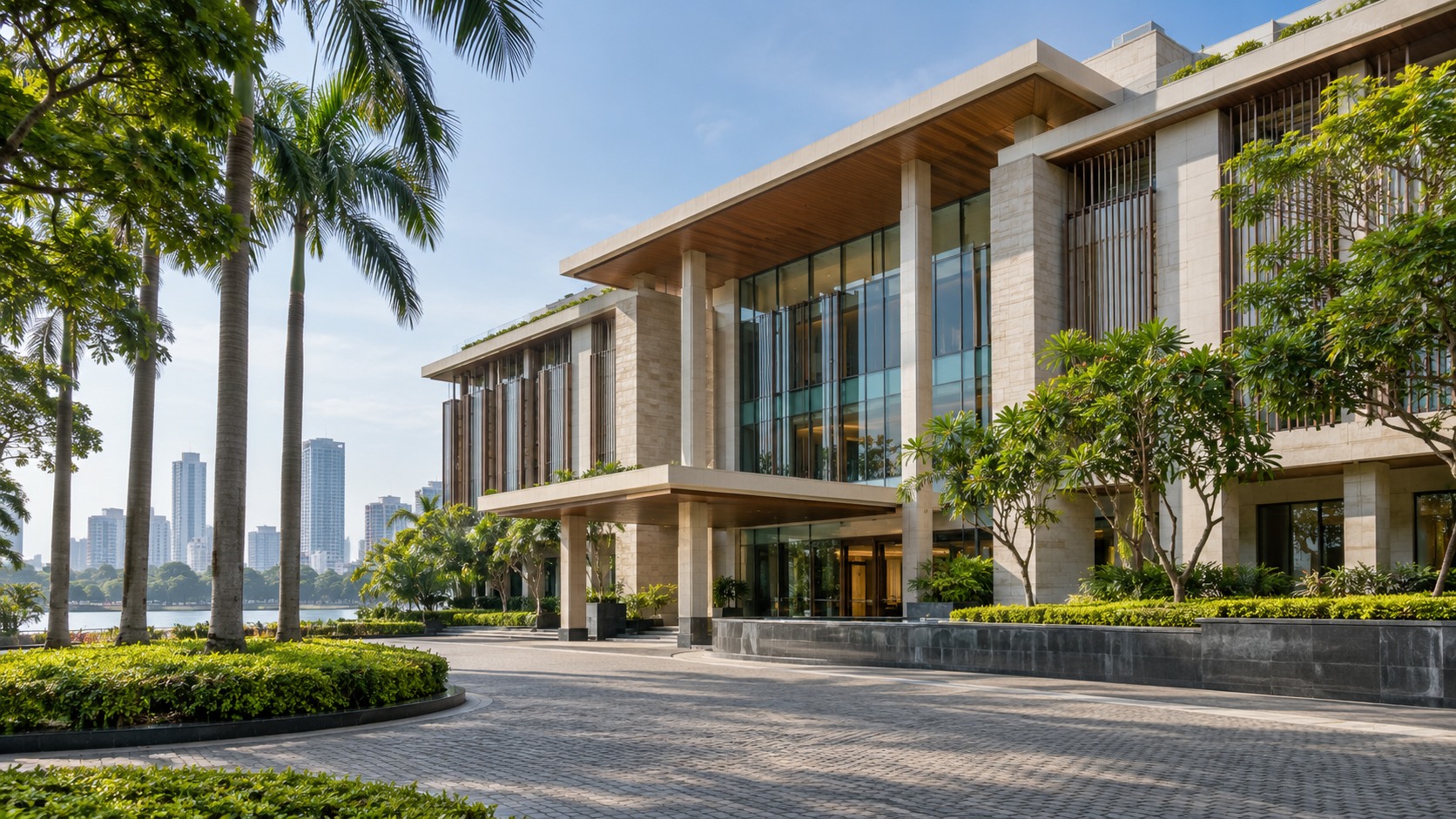
In December 2024, the US Embassy in Colombo became Sri Lanka’s 50th Gold LEED-certified building — a milestone that marks how far LEED adoption has spread across both government and private projects on the island, not just flagship commercial towers.
On the residential side, Dynasty Residence became Sri Lanka’s first apartment building to achieve LEED certification, showing the same credit structures that apply to offices and embassies extending into residential development as well.
How Ecoinch helps

Ecoinch’s LEED and EDGE credit structures are built into the platform, not bolted on as a generic checklist — every credit has its own responsible owner, evidence requirement and deadline, visible to everyone on the project at once. For a market where certification literacy and approval timelines are the two biggest named obstacles, that visibility is the difference between a project that drifts past its target rating and one that catches a missing credit while there’s still time to fix it.
GRI-aligned sustainability reporting sits alongside certification tracking in the same workspace, for teams whose certification work is part of a larger ESG or financing conversation rather than a standalone building project.
How a certification project runs on Ecoinch

A project starts by registering and selecting its framework — LEED or EDGE, matched to whichever credit structure the team is pursuing. Credits are then assigned to the people actually responsible for each one, evidence is collected and verified as the project progresses, and submission readiness is tracked continuously rather than discovered during a last-minute scramble before the certifying body’s deadline.